.svg)
Requirements Management Software for Customer Requirements
Booma helps teams turn customer RFPs, tenders, URSs, and technical specifications into structured requirements they can review, respond to, and track.
Built for bid teams, sales engineers, system integrators, EPCs, and suppliers, Booma handles the work between receiving a customer document and handing clear, traceable requirements to the teams responsible for delivery.
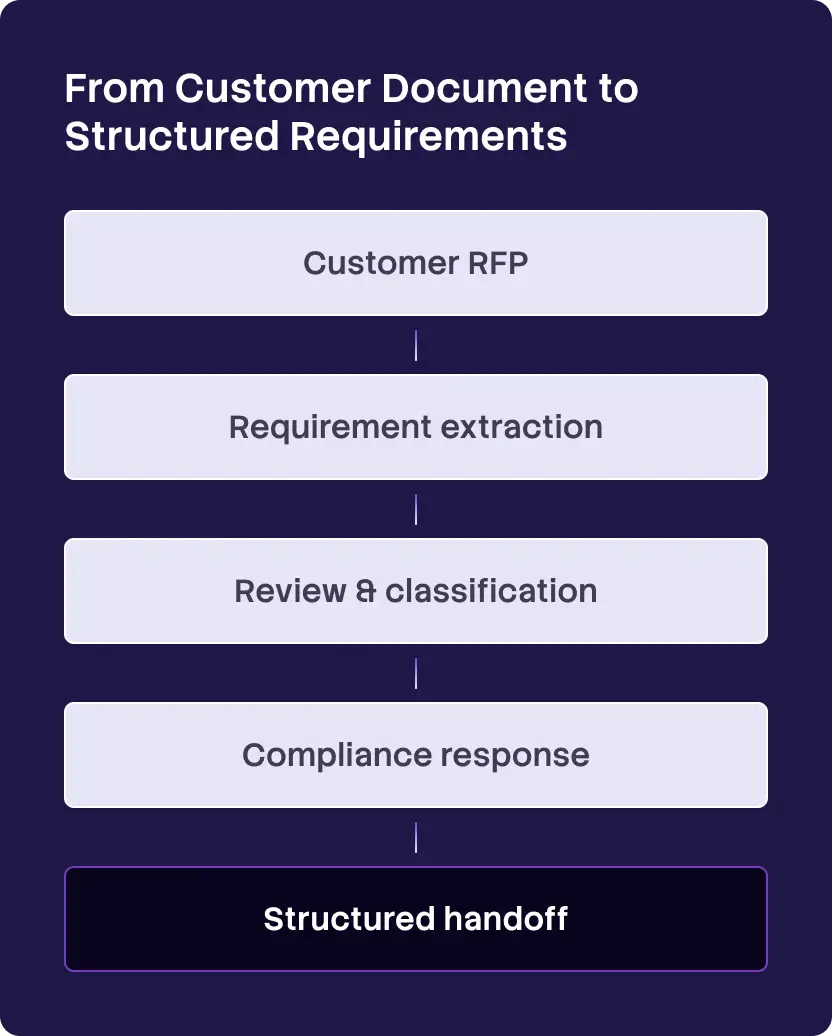
Requirements Management Starts When the Customer Document Arrives
Most requirements management tools are built around requirements that a team already owns and manages internally. Booma starts earlier.
Your process begins when a customer sends you a document:

A 300-page URS in PDF format
An ITT with multiple technical annexes
An RFQ containing engineering and commercial requirements
A revised specification issued shortly before submission
A technical document containing tables, footnotes, referenced standards, and requirements across multiple languages
Before engineering can design, test, or deliver anything, someone has to understand what the customer is actually asking for.
That means finding the requirements, separating them into workable items, assigning ownership, checking compliance, and building a response that can be reviewed internally and defended later.
Many teams still do this across Excel, email, shared drives, and manually built compliance matrices.
Booma brings that process into one structured workflow.
What Booma Helps You Do
Capture customer requirements
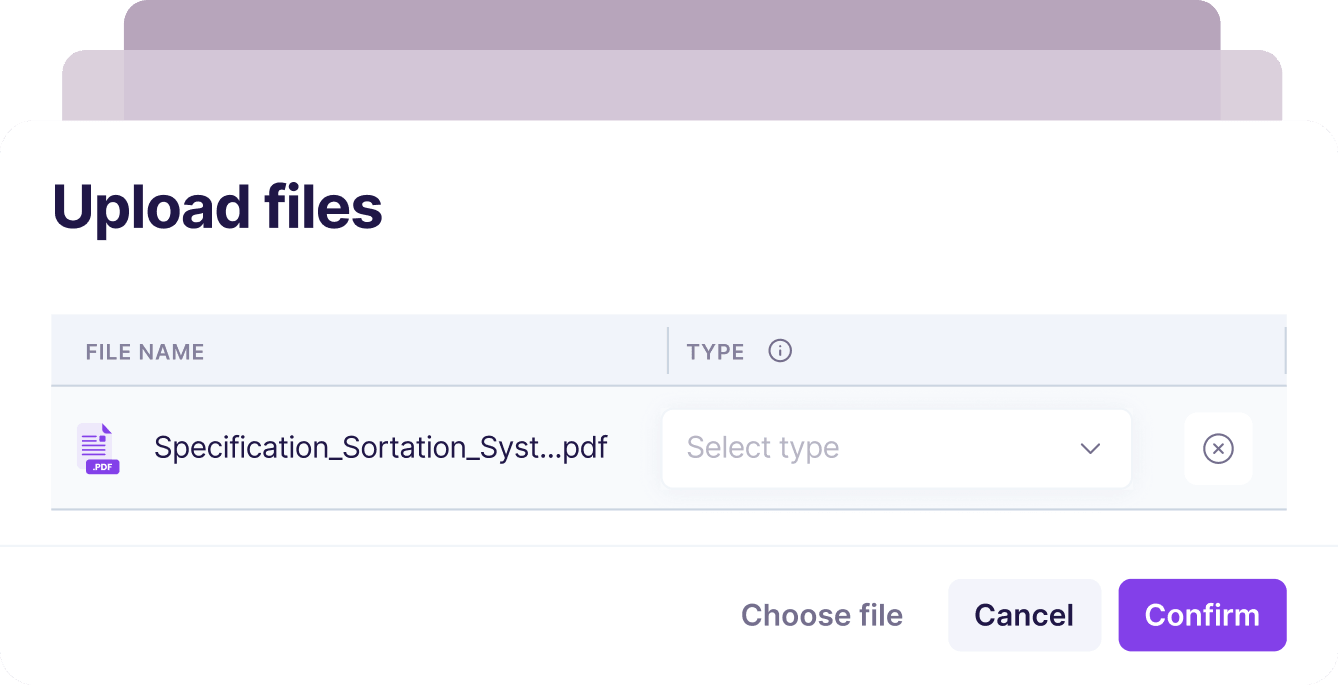
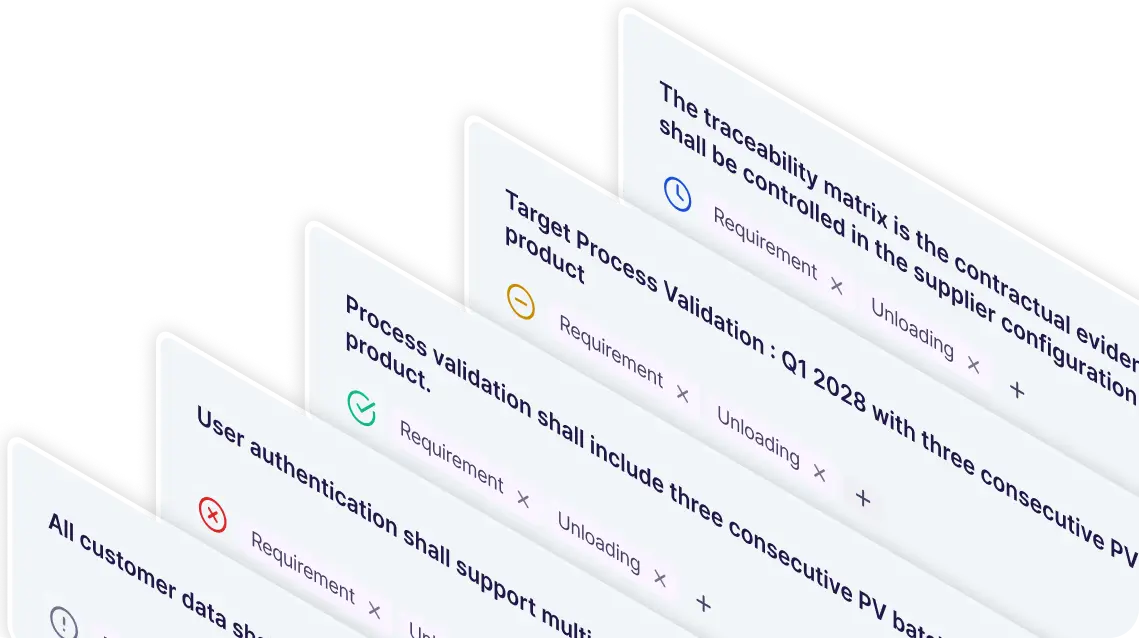
Extract requirements
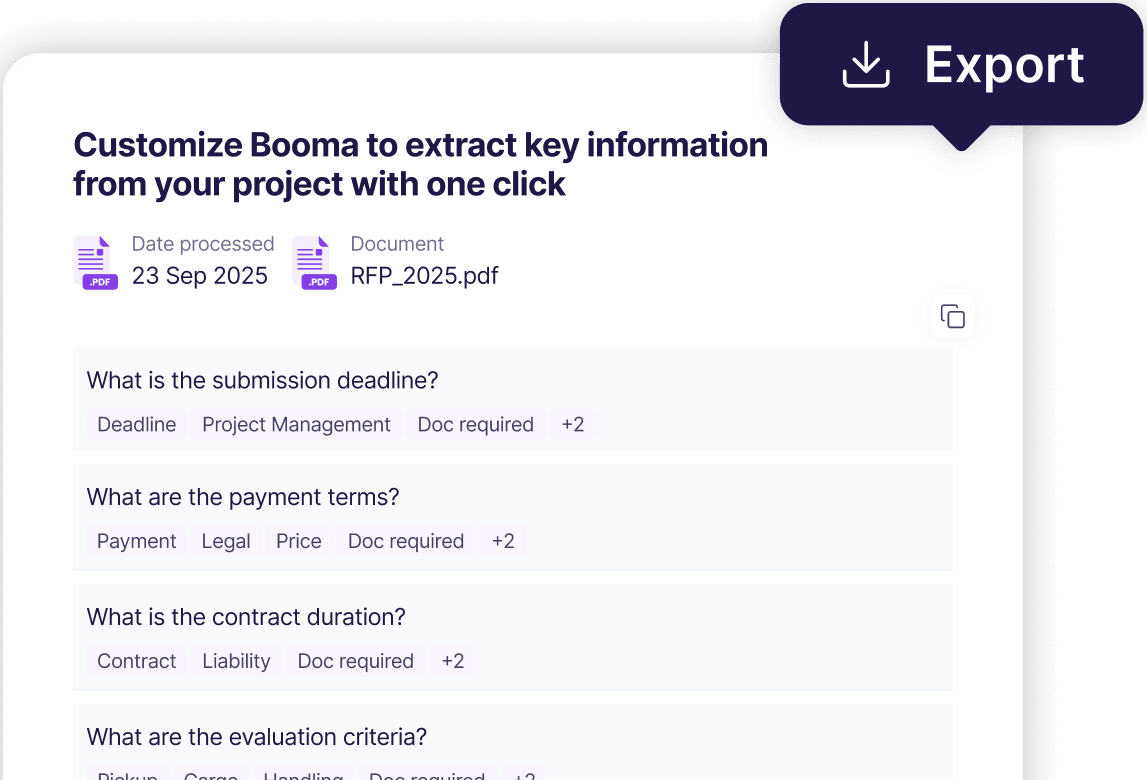
Keep the source context
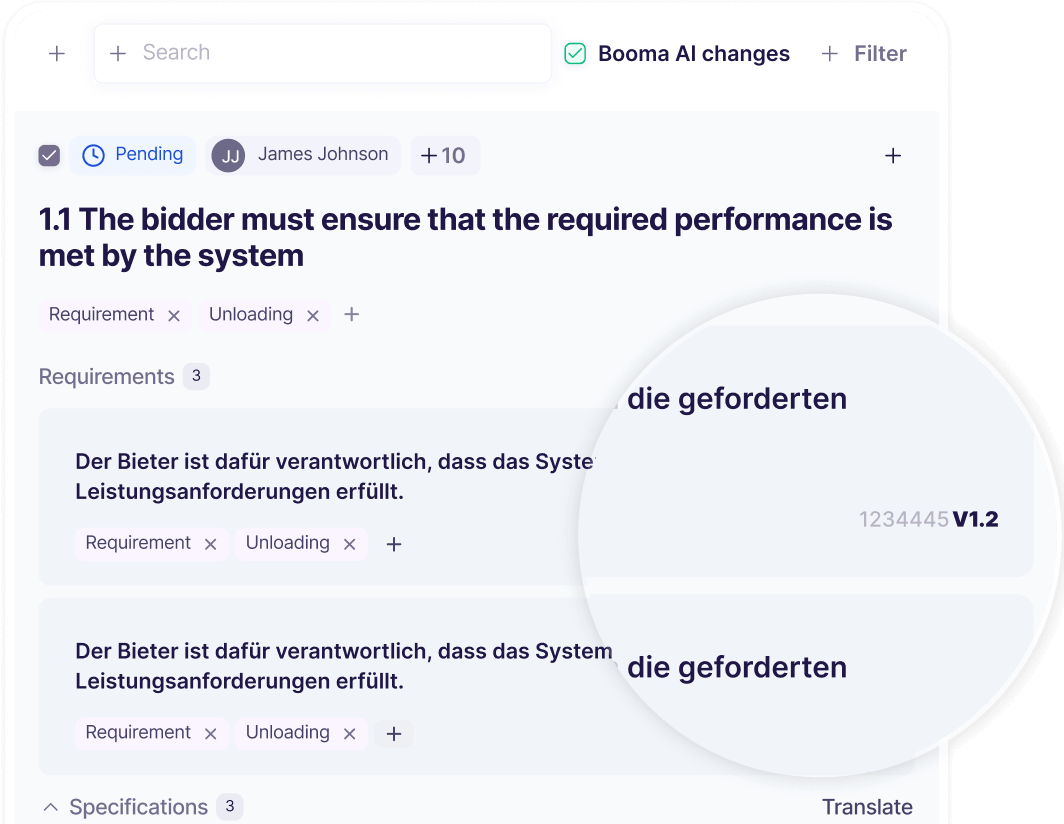
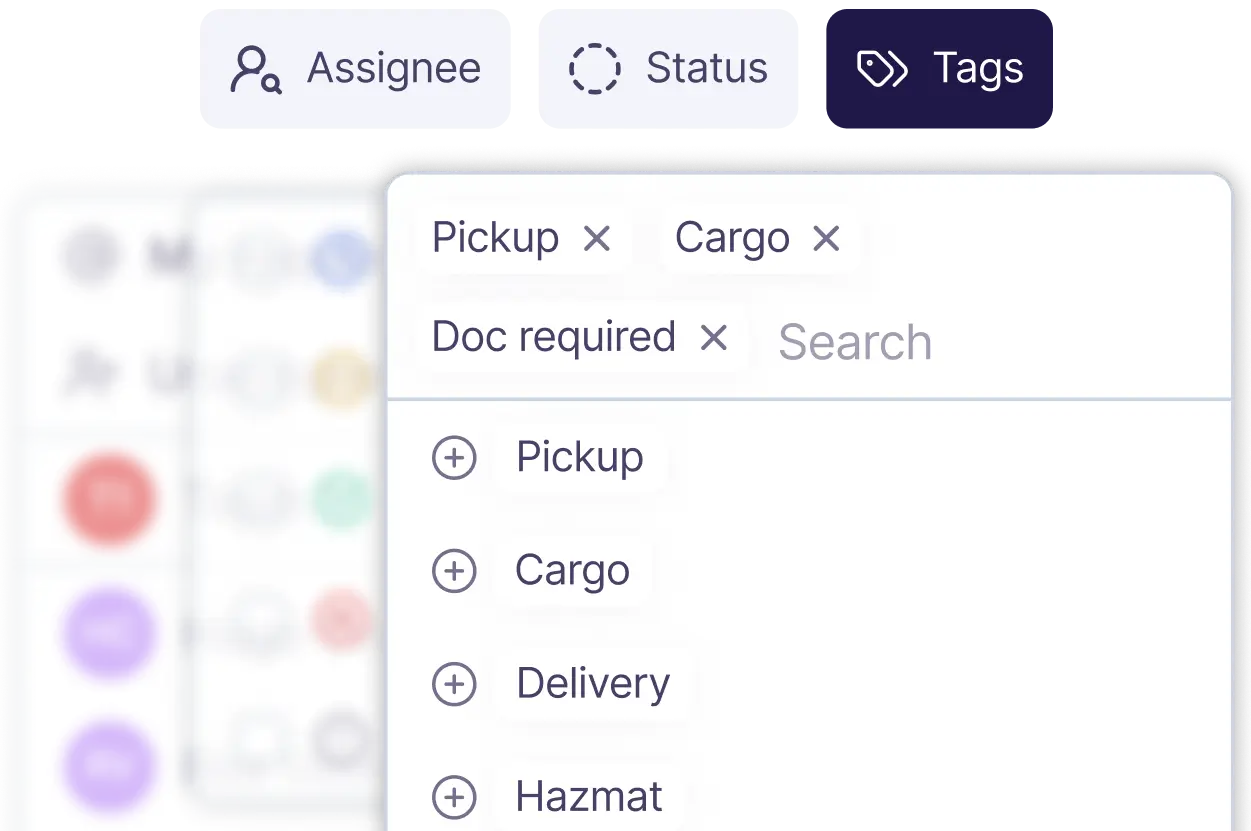
Structure and classify
Reuse previous work
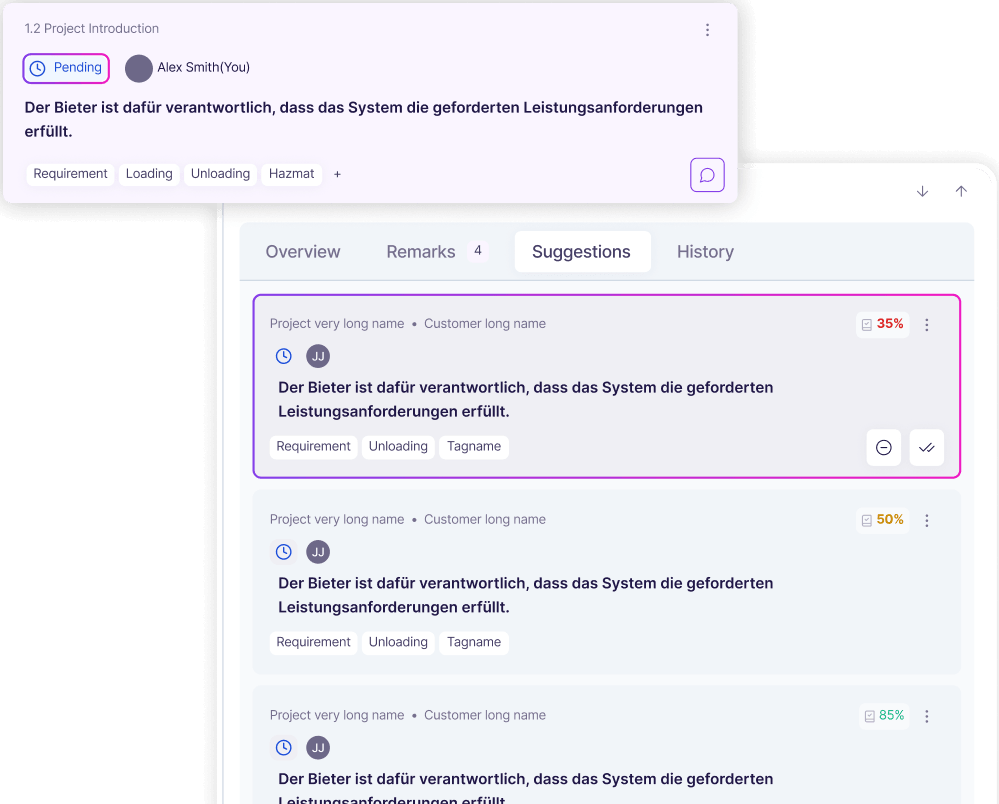
Find gaps and conflicts
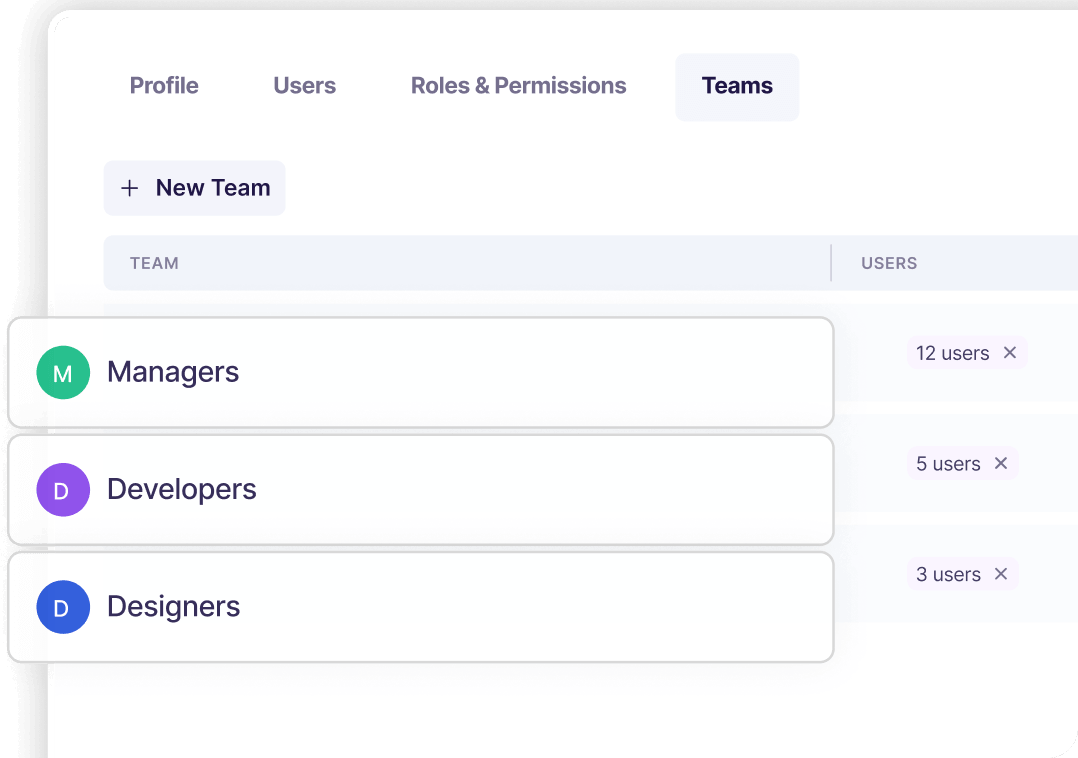
Work across teams
Track revisions
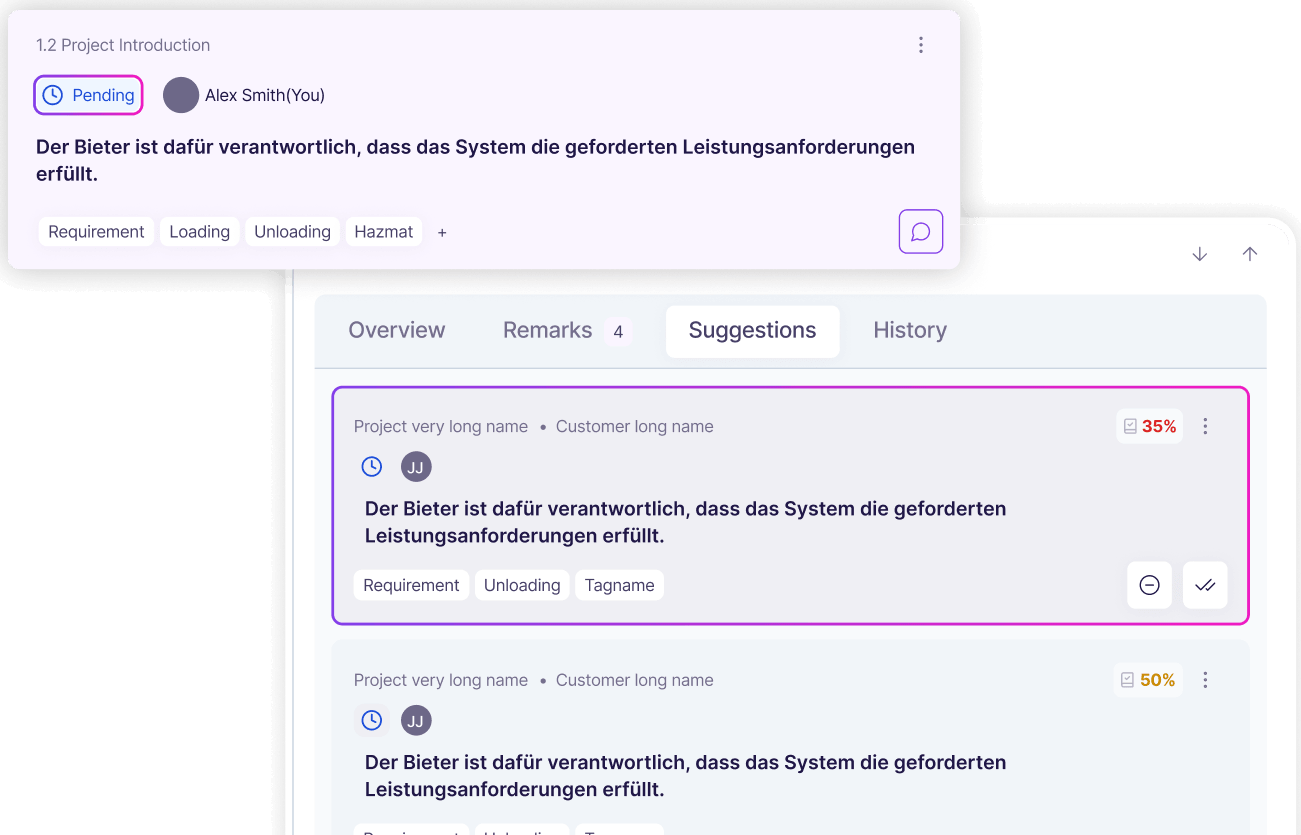
Hand off structured requirements
A Requirements Workflow Built for the Receiving Side
Receiving-side requirements management starts with an external document, not a blank requirements repository. Learn more about the requirements management process and how teams move from customer documents to a structured compliance response.
Receive
Review warehouse concepts, material handling specifications, and customer documentation to identify structured requirements before project execution.
Extract
Extract requirements from paragraphs, tables, footnotes, annexes, and other parts of the customer documentation.
Structure
Turn long and compound clauses into individual requirements that can be reviewed and managed.
Classify
Organise requirements by type, discipline, priority, standard, source, and ownership.
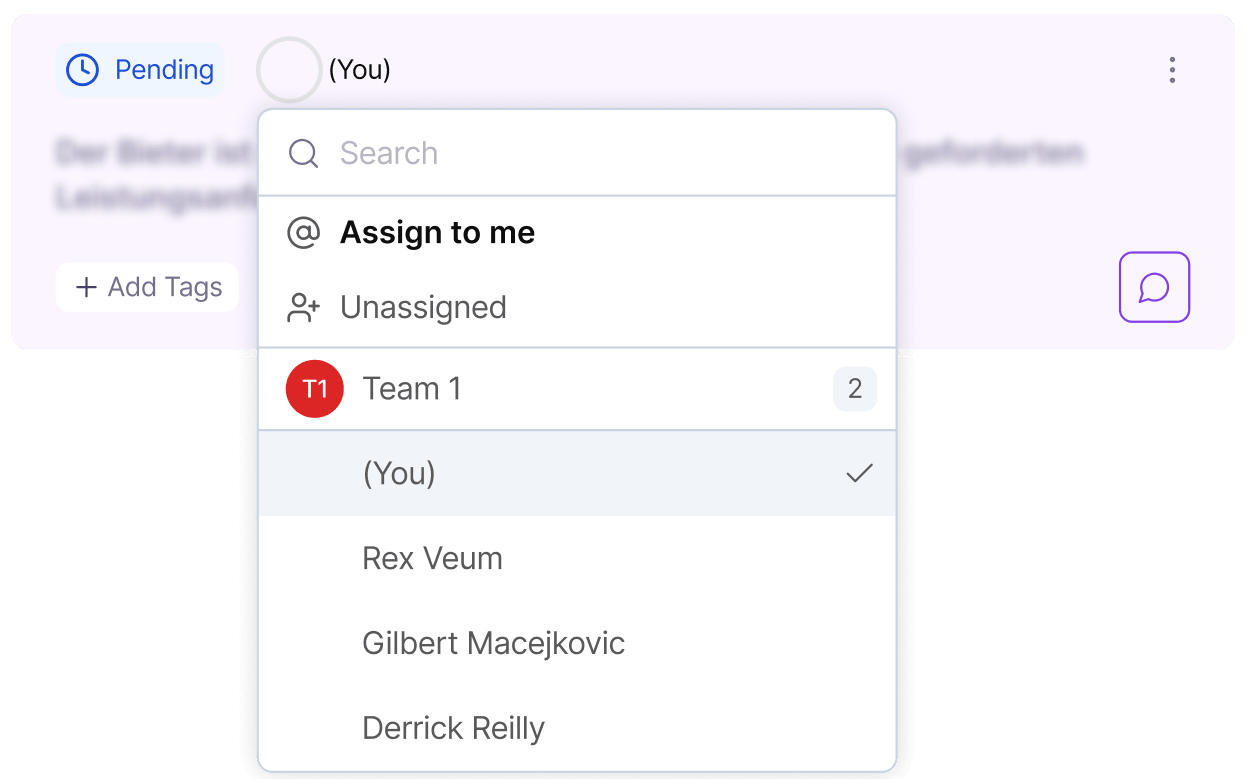
Assign
Route requirements to the right bid, engineering, quality, safety, procurement, or commercial team.
Match
Compare requirements with your existing product capabilities, specifications, previous bids, and supporting evidence.
Respond
Record compliance status, explanations, assumptions, exceptions, and other information needed for the response.
Trace
Keep each response connected to its source requirement, evidence, revision, and downstream commitment.
Submit
Build or export the structured compliance response while keeping the underlying requirement record intact.
Everything You Need to Manage Customer Requirements
AI requirement extraction
Extract requirements from customer-issued documents without manually copying hundreds of clauses into a spreadsheet.
Requirement classification
Organise requirements by discipline, type, priority, standard, source, and ownership.
Compliance analysis
Identify where your solution meets, partially meets, or fails to meet customer requirements.
Compliance matrix preparation
Create a structured response for customer review while retaining the internal context behind each decision. Learn more about requirements documentation on the receiving side.
Source-level traceability
Link each requirement to the source document, revision, page, paragraph, and supporting context through requirements traceability.
Cross-team collaboration
Give bid, sales, engineering, quality, and compliance teams one shared workspace.
Requirement comparison
Compare customer requirements with previous bids, product capabilities, and existing evidence.
Revision tracking
Identify changed, added, removed, or affected requirements when a customer updates its specification.
Process customer requirements across languages relevant to international bids, including English and German where applicable.
Use Booma as the intake and response layer before transferring validated requirements to systems such as Jama, IBM DOORS, Polarion, Visure, or an internal platform.
How Booma Fits Into the Requirements Workflow
Booma and traditional requirements management tools can support different stages of the same process.
he important question is where your requirements originate. Do you create and own the requirements, or do you receive them from a customer?
Swipe right to see more details ->
This comparison is about positioning and workflow, not a claim that other tools cannot import documents or manage requirements from external sources. Platforms such as Jama, DOORS, Polarion, and Visure can be valuable for teams that author, develop, test, baseline, and maintain their own product or system requirements.
Booma focuses on what happens before that stage: turning customer documents into structured, reviewed, and traceable requirements your organisation can act on. For a broader comparison of requirements management software and how different platforms support these workflows, see our guide to the best requirements management software for vendors and bidders.
Everything You Need to Manage Customer Requirements
Turn Multi-Disciplinary Specifications Into a Coordinated Response
System integrators often receive customer documents that span multiple engineering disciplines. Without a centralised process, each discipline may create its own interpretation and response.
A single specification may include requirements for:
- Mechanical systems.
- Safety and cybersecurity.
- Documentation and training.
- Electrical equipment.
- Regulatory and environmental compliance.
- Testing and acceptance.
- Controls and software.
- Performance and throughput.
- Interfaces with existing systems.
This allows the team to collaborate earlier while giving bid management visibility into overall response progress.
Booma helps system integrators:
- Extract requirements from the full customer document.
- Assign requirements to the correct discipline.
- Identify cross-functional dependencies.
- Track unanswered or conflicting clauses.
- Reuse responses from previous projects.
- Build a consolidated compliance response.
- Preserve the link between customer requirements and internal decisions.
This allows the team to collaborate earlier while giving bid management visibility into overall response progress.
Spend More Time Deciding, Less Time Copying
Bid teams often operate under short deadlines with incomplete information.
The task is not simply to answer whether the company can meet a requirement.
The team may also need to determine:Booma gives bid and sales engineering teams a structured workspace for these decisions. The result is a more consistent workflow from initial document review to final submission.
- Whether the standard product is sufficient.
- Whether custom engineering is required.
- Whether the requirement creates a cost or schedule impact.
- Whether clarification is needed from the customer.
- Which internal expert should provide the answer.
- Whether a similar response already exists.
- Whether a similar response already exists.
Process Customer Requirements Across Languages and Markets
International engineering companies may receive RFPs and specifications from multiple markets.
A team may need to work with:
- English and German customer documents.
- Customer-specific terminology.
- National regulatory references.
- Translated or bilingual specifications.
- Different compliance matrix formats.
- Market-specific documentation requirements.
Booma helps teams extract and organise requirements from customer documents while maintaining the source context needed for technical review.
For German-speaking markets, this can help teams structure incoming RFPs and specifications without forcing the initial review into a separate manual translation and spreadsheet workflow.
Important wording
Booma supports requirements workflows involving English and German documents. Exact language coverage, extraction behaviour, and output options should be confirmed during the product evaluation.
Built for Complex Engineering Workflows
Booma is designed for engineering organisations that process complex customer specifications, tenders, and RFPs. Customer examples and proof points can be displayed here once approved for public use.

Faster requirement review
Reduce the time required to review incoming specifications and create a structured requirement set.
More complete requirement visibility
Give teams a clearer view of requirements across long and complex customer documents.
Less spreadsheet work
Replace fragmented extraction and response workflows with a shared workspace.
Better reuse across bids
Turn previous compliance responses and engineering knowledge into reusable assets.
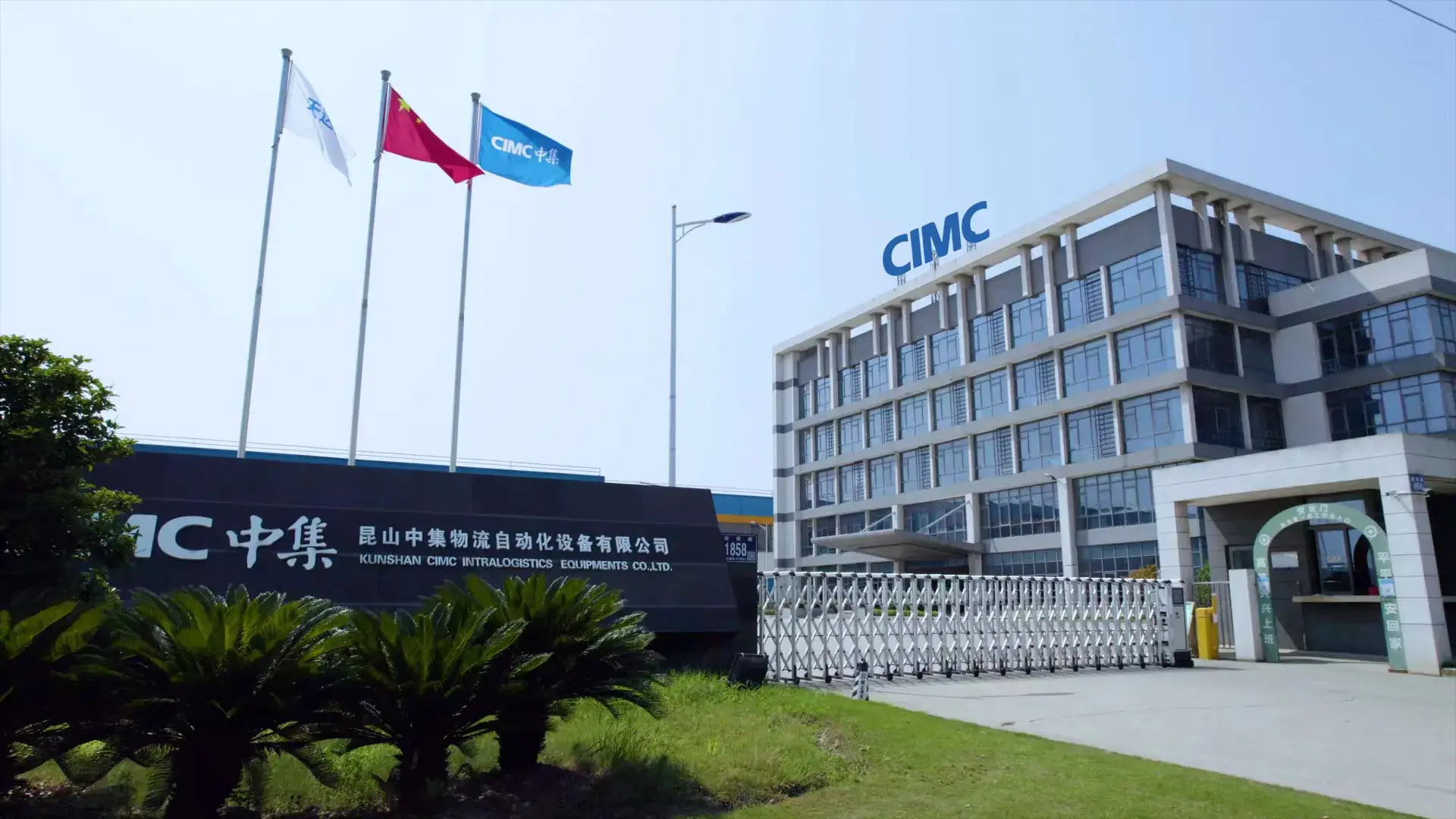
How CIMC Pteris Global improved its RFP workflow with Booma
CIMC Pteris Global receives airport logistics tenders of 500 to 1,000+ pages, spanning multiple engineering teams and technical disciplines. Before Booma, the team relied on manual document review and disconnected spreadsheets, spending days copying specifications, chasing compliance checks, and reconciling deviations across document versions.
With Booma, the team can extract requirements on day one, assign them to the right teams, and keep every customer clause linked to its compliance decision. From tender response to commissioning, requirements stay traceable, and deviations are caught early.
Frequently asked questions
What is requirements management software?
Requirements management software helps teams capture, organise, classify, track, review, and trace requirements throughout a project or product lifecycle. The exact workflow depends on where the requirements originate. Some platforms focus on requirements authored internally by systems engineering teams. Booma focuses on requirements received from customers through RFPs, URSs, tenders, and technical specifications.
What is receiving-side requirements management?
Receiving-side requirements management is the process of analysing and responding to requirements written by an external customer or contracting organisation. It includes extracting customer requirements, structuring them, assigning internal owners, checking compliance, preparing a response, tracking revisions, and maintaining traceability after submission.
Is Booma a replacement for Jama or IBM DOORS?
Not necessarily. Jama and IBM DOORS are widely used for internal requirements engineering, product development, and lifecycle traceability. Booma focuses on the receiving-side workflow that starts with customer-issued documents. Many organisations can use Booma before handing validated requirements to Jama, DOORS, Polarion, Visure, or another internal system.
How does Booma compare with Jama, DOORS, Polarion, or Visure?
These platforms generally focus on authoring-side requirements management: managing requirements owned and developed by an engineering organisation. Booma focuses on receiving-side work: extracting and analysing requirements from customer documents, preparing compliance responses, collaborating across bid and engineering teams, and preserving the receiving-side traceability chain. The best choice depends on where your workflow starts and what your team needs to manage.
Can Booma extract requirements from RFPs and PDFs?
Booma is designed to extract and structure requirements from customer-issued documents such as RFPs, URSs, tenders, technical specifications, and related files. During a product evaluation, confirm the exact supported file formats, document structures, extraction workflow, and review controls for your use case.
Can Booma process Word documents?
Booma’s receiving-side workflow is designed for documents commonly used in RFP and specification processes, including PDF and Word files. Your team can confirm specific format coverage and handling of tables, annexes, embedded content, and referenced documents during a demo.
Does Booma support German requirements?
Booma supports workflows involving English and German customer documents. Confirm the exact language coverage, terminology handling, and output behaviour for your document set during evaluation.
Can Booma create a compliance matrix?
Booma helps teams structure requirements, assess compliance, record justifications, and prepare a customer-facing response. The exact export format depends on your customer’s required template and the Booma workflow configured for your organisation.
Booma helps receiving-side teams review requirements against their capabilities and identify missing, unclear, conflicting, or potentially non-compliant requirements. Final compliance decisions should remain subject to review and approval by the responsible technical, commercial, and quality teams.
Booma is positioned to complement an organisation’s existing RM stack. Validated requirements can be prepared for export or handoff to internal platforms such as Jama, IBM DOORS, Polarion, Visure, Azure DevOps, or proprietary systems. Confirm the available integration and export options for your specific environment.
The first document can be reviewed as part of a product demonstration or evaluation workflow. The full implementation timeline depends on document volume, users, internal approval workflows, security requirements, integrations, and the level of process configuration required.
Booma is designed to support collaboration between bid, sales, engineering, quality, and compliance teams. Bid managers can coordinate requirements and response progress, while technical owners review and approve the engineering content.
Booma states that its platform is hosted in Germany, ISO 27001 certified, GDPR-compliant, and that customer data is not used to train AI models. These claims should link to the relevant security or privacy documentation and be reviewed with enterprise prospects.
See Booma in action
Book a 30-minute personalized demo. Bring your own specification — we’ll show you structured requirements in real time.
• Free onboarding included • German-speaking support